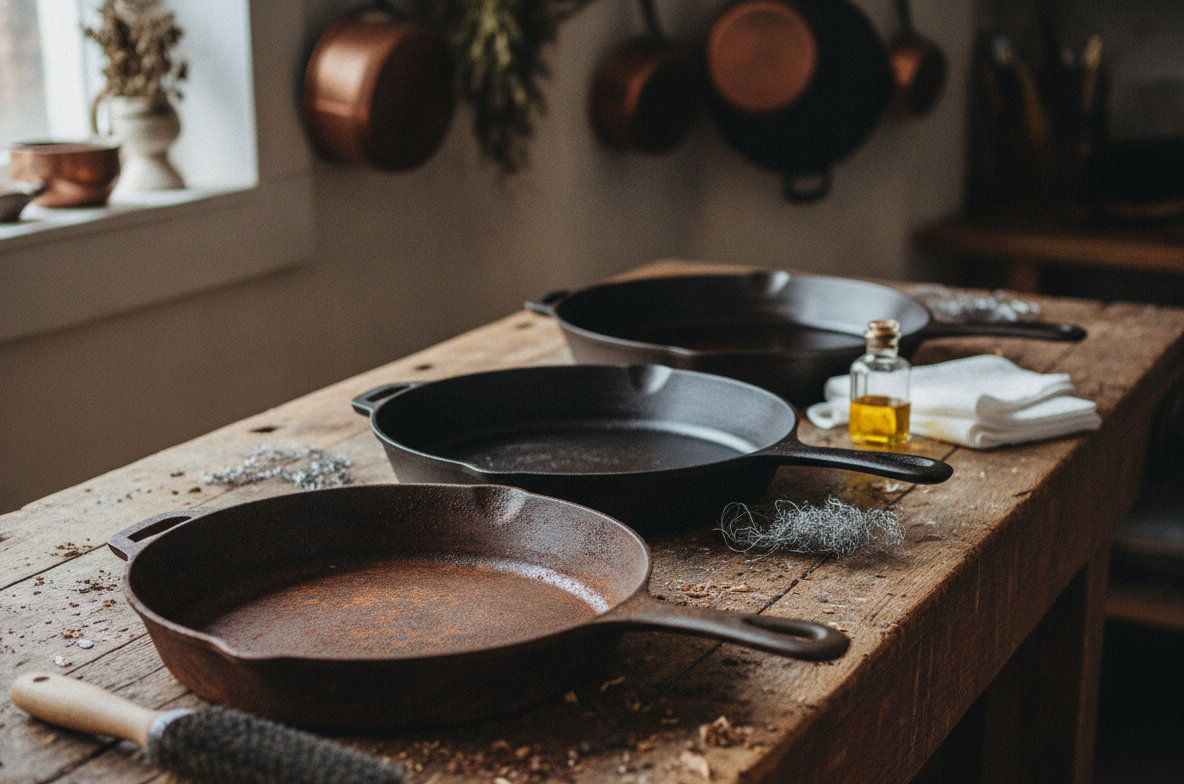
A reddish-orange patina often appears on cast iron cookware left undried or stored in humid environments. This is iron oxide, commonly known as rust. While disheartening to see, a rusted cast iron pan is rarely beyond salvation. With the right approach, you can effectively clean rust off cast iron and bring your skillet back to its optimal cooking condition.
Understanding Cast Iron Rust and Why It Forms
Cast iron is an alloy primarily composed of iron and carbon. Iron reacts with oxygen and moisture to form iron oxide. This chemical reaction is accelerated by high humidity, residual moisture after washing, or exposure to acidic foods that strip away the protective seasoning layer. A properly seasoned cast iron pan has a polymerized oil coating that acts as a barrier against rust. When this layer is compromised, the bare iron is exposed, and rust can quickly develop.
Mild Rust Removal: The Quick Fix for Surface Spots
Light, superficial rust spots are the most common issue. These usually result from leaving a pan to air dry or not applying a protective oil layer after a single use.
Method: Scouring with Abrasives
For mild rust, a simple abrasive scrub is often sufficient. Use hot water and a small amount of dish soap. Contrary to popular belief, soap will not ruin a well-seasoned pan, especially when you are trying to remove rust. Apply a sturdy scrubbing pad, steel wool, or even a chainmail scrubber. Vigorously scrub the rusted areas until the orange residue is gone and the bare metal or old seasoning is visible. Rinse the pan thoroughly under hot water. Dry it immediately and completely with a clean towel, then place it on a stovetop over low heat for a few minutes to evaporate any remaining moisture. This entire process typically costs less than $5, assuming you already own basic cleaning supplies.
Moderate Rust Removal: Vinegar and Baking Soda Techniques
When rust has progressed beyond simple surface spots, covering larger areas or feeling slightly rough to the touch, a more intensive approach is necessary. This level of rust often occurs after prolonged neglect or improper storage.
Method: Vinegar Soak and Scrub
White vinegar is mildly acidic and effective at dissolving rust without damaging the cast iron itself. Dilute white vinegar with an equal part of water in a basin or sink. Submerge the rusted cast iron pan in the solution. The soaking time depends on the severity of the rust. For moderate rust, a 30-minute to one-hour soak is usually enough. Do not leave the pan in the vinegar solution for too long (e.g., overnight), as the acid can start to etch the iron itself, making it more prone to rust in the future.
After soaking, remove the pan and scrub it thoroughly with a stiff brush, steel wool, or a metal scraper. You will see the rust dissolving and coming off. Rinse the pan well under running water. You can do this by making a paste of baking soda and a little water. Apply the paste to the pan, scrub again, then rinse thoroughly. Immediately dry the pan completely using a towel and then by heating it on the stovetop. This method generally costs under $10 for vinegar and baking soda.
Severe Rust Removal: The Electrolysis Method
For cast iron pans with extensive, deep-seated rust or significant pitting, the electrolysis method offers a powerful solution. This process uses an electrical current to convert iron oxide back into iron, effectively lifting the rust off the surface. It is a more involved procedure and requires specific equipment, but it can salvage pans that appear beyond repair.
Method: Setting Up an Electrolysis Bath
You will need a plastic tub (large enough to submerse the pan), a battery charger (12-volt, 2-10 amp), washing soda (sodium carbonate, not baking soda), and a sacrificial anode. The anode can be a piece of scrap steel, rebar, or stainless steel (avoiding galvanized steel or chrome-plated items due to toxic fumes). Fill the tub with water and add washing soda at a ratio of one tablespoon per gallon of water. Connect the negative clamp of the battery charger to the cast iron pan and the positive clamp to the sacrificial anode. Make sure the pan and anode do not touch.
Place the anode around the pan, ensuring current can flow evenly. Plug in the charger. Bubbles will form, indicating the electrolysis process is working. This can take anywhere from a few hours to a few days, depending on the rust's severity. Monitor the process regularly. Once the rust has turned into a black sludge, remove the pan, scrub it with a stiff brush to remove any remaining residue, and rinse thoroughly. Immediately dry the pan completely. The initial setup cost for electrolysis can range from $50 to $100 if you need to purchase a battery charger and washing soda. For a pan that is not antique or sentimentally valuable, replacing it with a new cast iron skillet (which typically costs $20-$50) might be a more practical decision.
Re-Seasoning Your Restored Pan
After cleaning rust out of cast iron using any method, the pan will be stripped of its protective seasoning. The bare metal is highly susceptible to flash rust, so immediate re-seasoning is essential. This step is critical for building a non stick surface and preventing future rust. For a more detailed guide, see our article on How to Season a Cast Iron Skillet.
Steps for Effective Re-Seasoning
- Preheat Oven: Set your oven to 450-500°F (232-260°C).
- Apply Thin Oil Layer: Apply a very thin, even layer of high smoke point cooking oil or cast iron conditioner to the entire pan, inside and out. Use a paper towel to rub it in, then use a clean, dry paper towel to wipe off as much excess oil as possible. The goal is a microscopic film, not a visible layer. Too much oil will result in a sticky, gummy finish.
- Bake Upside Down: Place the pan upside down in the preheated oven. Place aluminum foil or a baking sheet on the rack below to catch any drips.
- Bake and Cool: Bake for one hour. Turn off the oven and let the pan cool completely inside the oven.
- Repeat: Repeat this oiling and baking process at least three to five times to build a durable, non stick seasoning layer. More layers result in better protection and a slicker surface.
Recommended Seasoning Products
Choosing the right product can make the re-seasoning process more effective and provide better protection against corrosion. Many products are formulated specifically for cast iron, offering a blend of oils and waxes.
BLACKSTONE® Griddle Seasoning and Cast Iron Conditioner
This 15.3-ounce conditioner is a top choice not only for griddles but also for restoring and maintaining cast iron pans. Its 2-in-1 formula conditions the metal and creates a protective, easy-release surface. Based on product specs, the BLACKSTONE® conditioner helps to build a non stick seasoning layer that guards against rust. It's designed to give your cookware a slick, durable finish. This product weighs just under a pound, making it easy to handle.

- TLC for your griddle cooktop: All you need to build a slick, easy-release surface that's protected from.
- 2 in 1 formula (conditions & protects): Our cast iron seasoning formula creates a nonstick seasoning layer.
- Not just for griddles: Season or re-season your cast iron pans as well
- Proprietary Blend: Made of a proprietary blend of palm oil shortening, beeswax, palm oil, canola oil, and.



Lodge Cast Iron Seasoning Spray
Lodge, a long-standing name in cast iron cookware, offers an 8-ounce seasoning spray made from 100% canola oil. According to manufacturer data, it is ideal for maintaining the seasoning on your cast iron cookware. The spray format helps avoid over-application, preventing a sticky residue. This option is a lightweight choice, weighing only half a pound.

- The Lodge Seasoning Spray is the perfect seasoning spray to maintain your cast iron cookware. It is made.
- Step 1. Wash your cast iron cookware by hand, using a small amount of soap (for stubborn, stuck-on food.
- Lodge is more than just a business; it is a family. The Lodge family founded the company in 1896, and they.
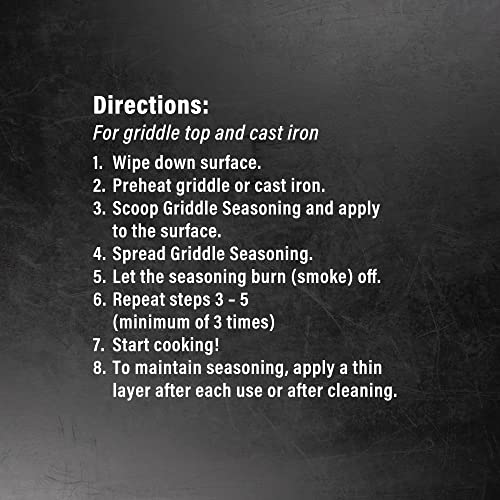
GriddleMATe Griddle Seasoning
The GriddleMATe Griddle Seasoning is a premium 2-in-1 formula suitable for cast iron, carbon steel, and griddles. At 6.5 ounces, it is crafted with a unique blend of high quality ingredients, including high oleic sunflower oil, which provides a high smoke point. Researched from user reviews, this formula is engineered to create a strong, non stick seasoning layer that protects your cast iron from rust and corrosion. Its high smoke point makes it particularly effective for seasoning at high temperatures.
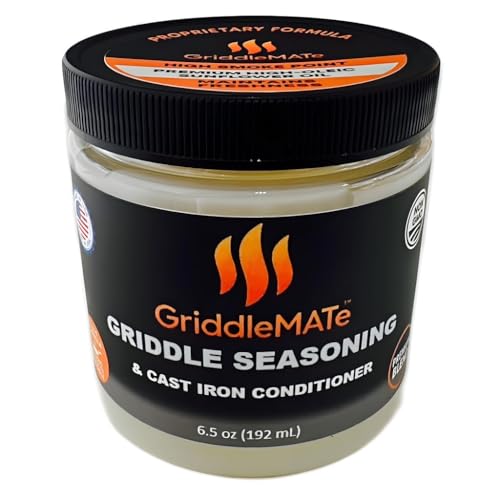
- Crafted with a unique blend of high quality ingredients, this proprietary formula is designed to deliver.
- Engineered with high oleic sunflower oil, our formula has a high smoke point that stands up to intense.
- Creates a strong, non stick seasoning layer that protects your griddle and cast iron from rust, corrosion.
- Unlike oily sprays or greasy treatments, GriddleMATe leaves a dry, natural finish with no sticky residue.


Preventing Future Rust on Your Cast Iron Pans
The most common cause of rust is moisture, so careful drying is your first line of defense.
Essential Maintenance Practices
- Dry Immediately: After every wash, dry your cast iron pan thoroughly with a clean towel. Do not let it air dry.
- Heat Dry: Place the pan on a stovetop over low heat for a few minutes until all moisture has evaporated. You can tell it is dry when no steam rises from the surface.
- Apply Thin Oil Layer: While the pan is still warm, apply a very thin layer of cooking oil (like canola, vegetable, or a cast iron conditioner) to the entire surface, inside and out. Wipe off any excess. This replenishes the seasoning and provides a protective barrier.
- Proper Storage: Store your cast iron in a dry cabinet or pantry. If stacking, place a paper towel between pans to absorb any residual moisture and prevent scratching.
- Avoid Dishwashers: Dishwashers use harsh detergents and high heat, which strip seasoning and lead to rust. Always hand wash cast iron.
Regular maintenance ensures your pans remain a durable and reliable part of your kitchen for generations.